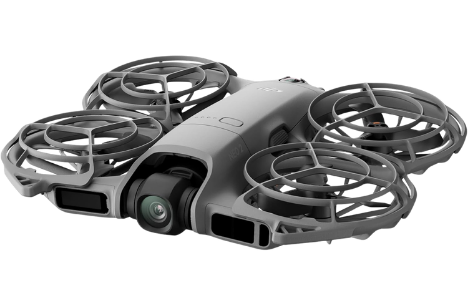
If you want to capture aerial footage without carrying a large professional drone, the DJI Neo 2 is one of the more interesting compact camera drones to consider. It combines a lightweight 151g design with 4K video, intelligent tracking, gesture control and omnidirectional obstacle sensing.
Faster, Smoother Tracking With Active Track, Omni directional Obstacle Sensing, Palm Takeoff & Landing, Gesture Control
That combination makes it particularly appealing to beginners, travellers, content creators and anyone who wants a drone that can capture footage with less equipment and setup time.
But a long list of features does not automatically make a drone a good purchase.
The important questions are whether the camera is good enough, whether the tracking features are genuinely useful, how easy the drone is to operate and whether the drone only version represents good value for money.
In this DJI Neo 2 review, we look at the important features, camera specifications, intelligent flight capabilities, portability and what UK buyers should know before purchasing.
Affiliate disclosure: This article contains affiliate links. If you purchase through one of our links, GadgetTonic may earn a commission at no additional cost to you.
DJI Neo 2: Quick Verdict
The DJI Neo 2 is designed around a simple idea: make aerial photography and follow-me footage easier for everyday users.
It weighs approximately 151g and features full-coverage propeller guards, making it considerably easier to carry than larger camera drones. DJI also gives it several automated shooting and flight features, including ActiveTrack, SelfieShot, gesture control and Return to Palm.
The camera can record up to 4K/60fps video and 4K/100fps slow motion, while its 12MP, 1/2-inch CMOS sensor and 2-axis gimbal are designed to improve image quality and stabilisation.
For someone who wants a compact drone for holidays, outdoor adventures, cycling, walking or social media content, the feature set is particularly attractive.
However, the Drone Only package is important to understand because it does not provide the same accessories as the more expensive Fly More or Motion Fly More packages.
Key Specifications
| Feature | DJI Neo 2 |
|---|---|
| Weight | Approx. 151g |
| Maximum Video Resolution | 4K/60fps |
| Slow Motion | Up to 4K/100fps |
| Photo Resolution | 12MP |
| Sensor | 1/2-inch CMOS |
| Gimbal | 2-axis |
| Maximum Flight Time | Up to 19 minutes |
| Internal Storage | 49GB |
| Video Transmission | DJI O4 up to 10km |
| Wi-Fi Transmission | Up to 500m |
| Obstacle Sensing | Omnidirectional |
| Tracking | ActiveTrack |
| Gesture Control | Yes |
| Return to Palm | Yes |
| Propeller Guards | Full coverage |
These are manufacturer’s specifications. Actual performance can vary depending on conditions, flight mode, environment and local regulations.
What Is the DJI Neo 2?
The DJI Neo 2 is a compact camera drone designed to make aerial filming more accessible.
Instead of requiring users to learn complicated manual controls before capturing useful footage, it provides several automated features designed around tracking, selfies and simplified operation.
One of its most interesting characteristics is that it can operate without a traditional remote controller for certain functions. DJI supports palm takeoff, gesture control and Return to Palm, while the drone can also be paired with compatible controllers for more advanced flying.
That makes the drone suitable for a wider range of users.
A beginner can start with automated features, while a more experienced user can add compatible controllers and explore more advanced flight options.
A Lightweight Design for Travel
At approximately 151g, portability is one of the strongest selling points.
A large camera drone can produce excellent footage, but it can also be inconvenient to take on a day trip, hiking adventure or holiday.
The smaller design of the Neo 2 makes it much easier to carry.
The drone also includes full-coverage propeller guards, which are useful when operating in environments where additional protection around the propellers is desirable.
For UK buyers, this makes it an interesting option for travel, outdoor content and everyday photography.
However, lightweight does not mean you should treat the drone as indestructible. You should always fly responsibly and follow the applicable UK drone rules.
4K Camera Performance
Camera quality is probably the most important consideration for anyone buying a camera drone.
The DJI Neo 2 features a 12MP 1/2-inch CMOS sensor and supports 4K/60fps video. DJI also lists 4K/100fps slow-motion recording when using suitable controllers or control equipment.
This gives the drone considerably more flexibility than a basic entry-level camera drone.
4K resolution is useful when you want detailed footage for YouTube, social media, travel videos or personal projects.
The higher frame-rate options are particularly useful when you want to slow footage down during editing.
For example, outdoor activities such as cycling, running or sports can benefit from slow-motion footage because movement can appear smoother and more dramatic.
2-Axis Gimbal Stabilisation
A camera drone needs more than a high-resolution sensor.
If the camera moves excessively during flight, footage can appear unstable even when recorded at 4K resolution.
The Neo 2 uses a 2-axis gimbal to help stabilise the camera.
This is an improvement over the original DJI Neo, which used a single-axis gimbal. DJI’s comparison information also highlights the Neo 2’s upgraded camera system and 2-axis stabilisation.
For everyday aerial footage, this can make a meaningful difference.
Smooth footage is particularly important when filming landscapes, travelling through scenic areas or recording yourself while moving.
ActiveTrack for Follow-Me Footage
One of the most appealing features is ActiveTrack.
The concept is straightforward.
Instead of manually controlling the drone throughout the entire flight, the system can track a subject and attempt to keep that subject within the frame.
DJI says the Neo 2 provides faster and smoother tracking and includes a cycling option within ActiveTrack.
This can be useful for:
- Cycling
- Walking
- Running
- Outdoor adventures
- Travel videos
- Fitness content
- Social media videos
For solo creators, this feature could be one of the biggest reasons to consider the drone.
You can potentially capture footage of yourself without needing another person to operate the camera.
Gesture Control
Gesture control adds another layer of simplicity.
According to DJI, users can control certain functions through hand gestures, including flight and shooting related operations.
This is particularly interesting for people who want to record themselves without holding a controller.
However, gesture control should not be interpreted as a replacement for careful flight planning.
DJI provides specific conditions and precautions for gesture control, including suitable lighting and maintaining appropriate distances from the aircraft.
As with any automated drone feature, the user remains responsible for operating the aircraft safely.
Palm Takeoff and Return to Palm
Another beginner-friendly feature is palm operation.
DJI describes palm takeoff as a simple process where the aircraft can be launched from the user’s hand. Return to Palm allows the drone to return to the user’s palm under supported conditions.
This can make the drone more convenient when there is limited space available for conventional takeoff and landing.
It also fits the overall design philosophy of the product.
The Neo 2 is not simply trying to be a smaller professional drone. It is trying to make aerial photography easier for people who may not want to spend significant time learning complex controls.
Omnidirectional Obstacle Sensing
Obstacle sensing is another major improvement.
The DJI Neo 2 uses an omnidirectional monocular vision system together with forward-facing LiDAR and downward infrared sensing, according to DJI. The system is designed to detect obstacles and improve flight awareness.
This is particularly useful for beginners because obstacles can appear quickly when a drone is moving.
However, obstacle sensing should never be considered a guarantee against collisions.
Trees, branches, wires, glass, low-texture surfaces and difficult lighting conditions can still create risks.
You should always maintain visual awareness of the aircraft and follow safe flying practices.
49GB of Internal Storage
Storage is another area where the Neo 2 stands out.
DJI lists 49GB of internal storage, which provides space for recording without immediately needing an external storage card.
For casual users, this can make getting started much easier.
You can take the drone out, capture footage and transfer your files later without necessarily having to purchase additional storage before your first flight.
For frequent creators, however, you should still develop a reliable workflow for transferring and backing up footage.
Up to 19 Minutes of Flight Time
The maximum advertised flight time is approximately 19 minutes.
This is one area where potential buyers should manage their expectations.
Nineteen minutes can be enough for short filming sessions, but it is not a huge amount of time if you are planning a long outdoor shoot.
The actual flight time can also vary depending on conditions and how the aircraft is being used.
If you plan to spend an entire afternoon filming, additional batteries or one of the larger package options may make more sense.
This is one of the reasons it is important to compare the Drone Only package with the Fly More options before purchasing.
Is DJI Neo 2 Good for Beginners?
For beginners, the feature set is one of the strongest arguments in favour of the drone.
Palm takeoff, gesture control, automated tracking and obstacle sensing reduce some of the complexity associated with conventional drone operation.
The drone can also be used with additional controllers if you later want greater control over flight.
This means a beginner does not necessarily have to start with advanced manual flying.
You can begin with the simpler features and gradually learn more as your confidence improves.
That makes the drone particularly appealing to people who want to create aerial footage without becoming professional drone pilots.
Who Is It Best For?
The DJI Neo 2 is particularly suited to:
Travel Creators
Its compact size makes it easier to carry when travelling.
Social Media Creators
Automated shooting modes can help solo creators produce footage without another camera operator.
Cyclists and Outdoor Enthusiasts
ActiveTrack can be useful for capturing movement while cycling, walking or participating in outdoor activities.
Beginners
Palm controls, gesture features and automated functions can make the initial learning curve less intimidating.
Casual Drone Users
If you want aerial footage without purchasing a large professional drone, its compact design makes it an appealing option.
First Impressions
The biggest strength of the DJI Neo 2 is not a single specification.
It is the combination of portability, intelligent features and camera capabilities.
A 151g aircraft with 4K/60fps recording, 12MP imaging, a 2-axis gimbal, automated tracking, gesture control and obstacle sensing provides a surprisingly broad feature set in a compact package.
But whether it is the right purchase depends on how you intend to use it.
If your priority is portability and automated content creation, it becomes much more attractive.
If you need long flight times, professional-level camera performance or extensive manual control from the beginning, you may want to consider a larger drone.
Part 2 will look at the buying decision in more detail, including the Drone Only package, accessories, real-world use cases, pros and cons, UK considerations, alternatives and our final GadgetTonic verdict.
DJI Neo 2 Review: UK Buying Guide, Pros, Cons and Final Verdict
In Part 1, we looked at the camera, intelligent flight features, portability, tracking, obstacle sensing and battery performance. Now it is time to focus on the buying decision.
The DJI Neo 2 is available in different configurations, and the package you choose can significantly affect the overall value. The product shown for this review is the Drone Only version, so it is important to understand what you actually receive before placing an order.
We will also look at UK flying requirements, the advantages and disadvantages of the drone, who should buy it and whether spending more on a larger DJI model makes sense.
DJI Neo 2 Drone Only: What Do You Get?
The Drone Only package is aimed at buyers who already have compatible DJI equipment or simply want the aircraft itself.
The product listing supplied for this review shows the Drone Only version at approximately £208.99. Retail prices can change, so treat this as the price visible when the product was checked rather than a permanent price.
According to DJI’s UK store, the Neo 2 is also available in larger combinations, including Fly More packages. The larger packages can include additional batteries, charging equipment and a controller, depending on the exact configuration.
This creates an important buying decision.
If you are completely new to drones, the Drone Only package may not necessarily be the most convenient option.
If you already own compatible equipment, however, buying the aircraft separately could make much more sense.
What Is Included?
The exact contents depend on the package selected, but the Drone Only configuration is centred around the aircraft rather than a complete extended flight kit.
The product information supplied with the listing includes items such as:
- DJI Neo 2 aircraft
- Intelligent Flight Battery
- Spare propellers
- Propeller-related protection equipment
- Gimbal protector
- USB-C to USB-C cable
Always check the current retailer’s What’s in the Box section before ordering because package contents can vary between configurations.
Is the Drone Only Version Worth Buying?
For an existing DJI user, potentially yes.
For a first-time drone owner, the decision is less straightforward.
A single battery limits how long you can remain in the air before needing to recharge. DJI lists a maximum flight time of approximately 19 minutes, although real-world flight duration can vary depending on conditions and usage.
If you want to spend several hours filming outdoors, additional batteries can therefore become very useful.
This is why it is worth comparing the Drone Only price with the Fly More package before making your final purchase.
The cheaper package is not necessarily the cheapest overall solution if you later need to purchase several accessories separately.
DJI Neo 2 vs DJI Neo
If you are considering the original DJI Neo as an alternative, the differences are worth understanding.
| Feature | DJI Neo 2 | DJI Neo |
|---|---|---|
| Weight | 151g | 135g |
| Maximum Video | 4K/60fps | 4K/30fps |
| Slow Motion | 4K/100fps | Not listed |
| Gimbal | 2-axis | 1-axis |
| Internal Storage | 49GB | 22GB |
| ActiveTrack | Yes | Limited FocusTrack |
| Gesture Control | Yes | No |
| Return to Palm | Yes | No |
| Obstacle Sensing | Omnidirectional | Not available |
| Maximum Flight Time | 19 minutes | 18 minutes |
DJI’s own comparison shows that the newer model brings improvements in imaging, stabilisation, intelligent features, storage and sensing.
The original Neo can still make sense if you find it at a substantially lower price.
However, buyers who specifically want better tracking, improved sensing and a 2-axis gimbal should look closely at the newer model.
DJI Neo 2 vs a Larger Camera Drone
The next question is whether you actually need a compact drone.
A larger camera drone can offer advantages such as longer flight times, more advanced cameras, stronger wind performance and additional manual controls.
A compact drone has a different purpose.
It prioritises portability and simplicity.
For a traveller who wants to capture a few minutes of aerial footage during a holiday, carrying a lightweight aircraft can be more convenient than transporting a larger professional drone.
For commercial filmmakers, however, a compact drone may not provide everything required.
The correct choice therefore depends on your priorities.
Choose a Compact Drone If You Want:
- Easy transportation
- Automated tracking
- Quick setup
- Self-filming
- Lightweight equipment
- Social media content
- Travel photography
- Casual aerial footage
Consider a Larger Drone If You Need:
- Longer flight sessions
- More advanced camera performance
- Greater wind resistance
- Professional production workflows
- More extensive manual control
- Advanced aerial cinematography
UK Drone Rules: What Buyers Need to Know
This is an important section for anyone buying a camera drone in the UK.
The fact that an aircraft weighs less than 250g does not mean you can simply fly it anywhere without requirements.
The current UK Civil Aviation Authority guidance states that anyone wanting to fly a drone weighing 100g or more must pass the relevant theory test to obtain a Flyer ID. For a drone weighing 100g to less than 250g with a camera, an Operator ID is also required.
At approximately 151g, this drone falls within that weight range.
That means UK buyers should not assume that its lightweight design removes registration responsibilities.
The CAA also states that an Operator ID is the responsibility of the person responsible for the drone and that the Operator ID must be labelled on the aircraft where required.
What About UK Class Marks?
UK drone rules changed from 1 January 2026.
The CAA states that new drones placed on the UK market from 1 January 2026 must have an applicable UK class mark. There are also transitional arrangements for European class-marked aircraft.
Because classification and operating permissions can depend on the exact aircraft and circumstances, buyers should check the current CAA guidance and the classification supplied with their specific drone.
Do not rely solely on an online product description when determining where and how you can legally fly.
Where Can You Fly?
The CAA’s Drone Code sets out the requirements for different Open Category operations, including rules concerning people, buildings and locations.
The rules are not simply based on whether your drone is small.
You should check the current Drone Code before your first flight and make sure you understand the restrictions applying to your aircraft and the area where you intend to fly.
This is particularly important when filming in busy public places, near residential areas or around other people.
Privacy and Responsible Filming
A camera drone gives you the ability to record people and private property from the air.
That means responsible use matters just as much as flight safety.
Before recording, think about whether people could reasonably expect privacy and avoid unnecessarily capturing private areas.
The CAA’s Drone Code contains specific guidance concerning privacy and responsible photography or recording.
For content creators, this is particularly important.
Getting an impressive shot is never a good reason to ignore privacy or aviation rules.
Pros and Cons
Pros
Lightweight Design
At approximately 151g, it is easy to carry compared with many larger camera drones.
4K/60fps Video
The ability to record 4K/60fps gives creators more flexibility when shooting and editing footage.
4K Slow Motion
4K/100fps slow motion can be useful for action shots and creative video production.
2-Axis Gimbal
The upgraded gimbal provides better stabilisation than the original Neo’s single-axis design.
ActiveTrack
Automated tracking can help solo creators record themselves while walking, cycling or participating in outdoor activities.
Omnidirectional Obstacle Sensing
Additional sensing technology provides another layer of awareness during flight, although it should never replace responsible piloting.
Gesture Control
Hands-free controls can make certain filming situations easier.
49GB Internal Storage
The built-in storage means you can begin recording without immediately depending on removable storage.
Cons
Limited Maximum Flight Time
The advertised maximum flight time is approximately 19 minutes, so additional batteries may be desirable for longer shoots.
Drone Only Package
The cheaper configuration does not provide the same complete setup as larger bundles.
UK Registration Requirements
Because the aircraft is over 100g and has a camera, UK buyers need to pay attention to Flyer ID and Operator ID requirements.
Weather Limitations
A lightweight drone can be more affected by difficult weather conditions than a larger aircraft.
Automated Features Are Not Foolproof
Tracking and obstacle sensing can assist the pilot, but they should never be treated as a substitute for maintaining awareness of the drone and its surroundings.
Who Should Buy This Drone?
The DJI Neo 2 is a particularly interesting option for people who want to combine portability with automated aerial filming.
Travel Creators
If you travel frequently and want something small enough to carry without dedicating an entire bag to drone equipment, this type of design is appealing.
TikTok and Instagram Creators
Automated tracking and hands-free features can make solo content creation easier.
YouTube Creators
4K recording gives creators enough resolution for high-quality online video production.
Cyclists and Outdoor Enthusiasts
ActiveTrack can be useful for recording movement from the air.
Beginners
The combination of automated flight features, sensing technology and palm controls makes the learning process less intimidating than starting with a large professional drone.
Who Should Not Buy It?
This may not be the right drone if your primary goal is professional cinematic production.
You may also want to look elsewhere if long flight times are more important than portability.
Likewise, if you already own a larger DJI drone with better camera hardware and do not need a smaller aircraft, upgrading may not provide enough benefit.
The key is to buy according to your actual shooting requirements rather than simply choosing the newest model.
Is DJI Neo 2 Worth Buying in the UK?
At the price of approximately £208.99 shown in the product listing supplied for this review, the Drone Only version presents an interesting proposition.
The biggest advantage is the amount of technology packed into a relatively small aircraft.
You get 4K/60fps video, 4K/100fps slow motion, 12MP imaging, 2-axis stabilisation, intelligent tracking, gesture control, omnidirectional obstacle sensing and 49GB internal storage.
That is a substantial feature list for a lightweight drone.
The main question is whether the Drone Only package provides everything you need.
If you already have compatible DJI equipment, the answer could be yes.
If you are starting from zero, compare the price of the Drone Only version against a Fly More package because the additional batteries and accessories can be valuable for regular flying.
Our Rating
| Category | Rating |
|---|---|
| Portability | 5/5 |
| Camera Features | 4.5/5 |
| Intelligent Features | 5/5 |
| Stabilisation | 4/5 |
| Beginner Friendliness | 4.5/5 |
| Battery Life | 3.5/5 |
| Overall Value | 4.5/5 |
Overall Rating: 4.4/5
Final Verdict
The DJI Neo 2 is not trying to replace every professional camera drone.
Instead, it focuses on making aerial filming more accessible, portable and automated.
Its combination of a 151g design, 4K video, 2-axis gimbal, ActiveTrack, gesture control, obstacle sensing and 49GB internal storage makes it particularly appealing to travellers, beginners and solo content creators.
The biggest limitation is flight time. With a maximum advertised flight time of around 19 minutes, serious creators should consider whether they need additional batteries or a larger package.
The Drone Only version can be attractive for buyers who already have compatible equipment, while first-time users should carefully compare the available bundles.
For UK buyers, remember that lightweight does not automatically mean regulation-free. At around 151g with a camera, the current CAA requirements mean you should obtain the necessary IDs and understand the rules before flying outdoors.
Our Recommendation
Buy it if: You want a compact 4K drone for travel, social media, solo filming, cycling, outdoor adventures or casual aerial photography.
Consider a larger drone if: You need longer flight times, more advanced camera performance or professional cinematography features.
Consider the Fly More package if: You are a frequent flyer and expect to need extra batteries and accessories.
Consider the Drone Only package if: You already have compatible DJI equipment or want the aircraft itself at the lowest initial cost.
For the right buyer, this is a very capable compact camera drone and one of the more interesting options in its category.
Frequently Asked Questions
Is the DJI Neo 2 under 250g?
Yes. The aircraft weighs approximately 151g according to DJI.
Does the DJI Neo 2 record in 4K?
Yes. DJI lists 4K/60fps video and up to 4K/100fps slow motion.
How long can it fly?
The maximum advertised flight time is approximately 19 minutes. Actual flight time can vary depending on conditions and usage.
Does it have obstacle avoidance?
It features omnidirectional obstacle sensing using its vision sensing system and forward-facing LiDAR.
Does it have internal storage?
Yes. DJI lists 49GB of internal storage.
Do I need a Flyer ID in the UK?
For a drone weighing 100g or more, the CAA currently requires a Flyer ID for outdoor flying covered by the relevant regulations.
Do I need an Operator ID?
For a camera drone weighing 100g to less than 250g, the CAA states that an Operator ID is also required.
Is the Drone Only package suitable for beginners?
It can be, but beginners should compare it with the larger bundles. A package with additional batteries and a controller may provide a more complete starting setup.
Is it good for travel?
Yes. Its approximately 151g weight and compact design are major advantages for travellers who want aerial footage without carrying a large drone.
GadgetTonic Final Take
If your priority is portable 4K aerial content rather than professional cinema production, this drone deserves a place on your shortlist.
Its strongest combination is portability plus automation.
You can carry it easily, use intelligent tracking to record yourself, capture 4K footage and take advantage of features such as gesture control and obstacle sensing.
The main thing to remember is that a compact drone is still an aircraft. Follow the current UK CAA rules, check the weather and flying location before every flight, maintain awareness of your surroundings and never assume that automated safety features make flying completely risk-free.
Bottom line: For UK buyers looking for a lightweight, feature-rich drone for travel, social media and everyday aerial photography, the DJI Neo 2 is a strong option worth considering.